Introduction
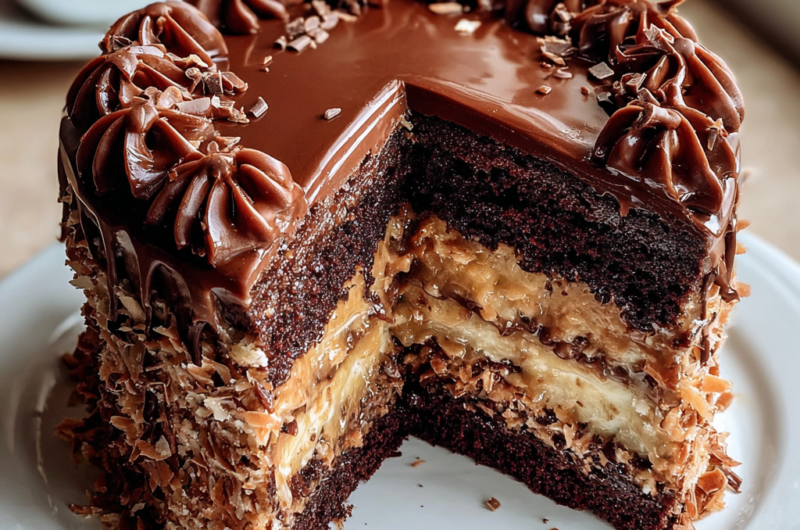
German Chocolate Cake is a delightful dessert that tantalizes the palate with its rich layers of chocolate and a signature coconut-pecan frosting. Despite its name, the cake doesn't originate from Germany but rather from an American named Samuel German, who created a dark-baking chocolate for a recipe in 1852.
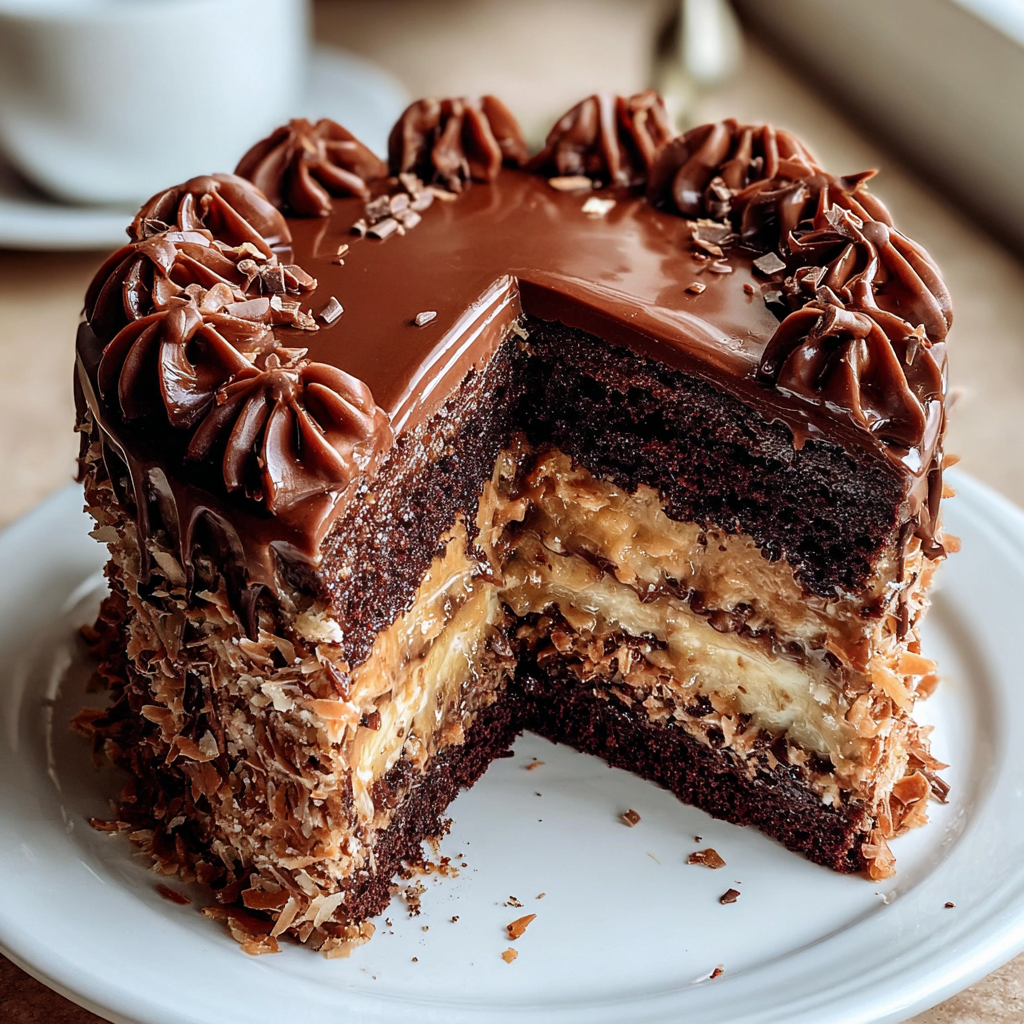
The unique combination of sweet chocolate cake, creamy frosting, and a crunchy topping of coconut and pecans makes this cake a favorite for celebrations. Whether it’s a birthday, anniversary, or simply a weekend treat, its layered texture and flavors are sure to impress.
Making German Chocolate Cake from scratch allows you to control the quality of every ingredient. Plus, the process becomes a rewarding culinary adventure that brings friends and family together. Let’s dive into creating this delightful masterpiece.
Ingredients
- 2 cups all-purpose flour
The foundation of any cake, flour provides structure. All-purpose flour is versatile, allowing the cake to rise and hold its shape when baked. - 2 cups granulated sugar
Sugar not only sweetens the cake but also helps with the browning of the crust and provides moisture, resulting in a tender crumb. - 3/4 cup unsweetened cocoa powder
Cocoa powder is responsible for giving the cake its rich chocolate flavor without adding extra fat. High-quality cocoa enhances the decadence. - 1 1/2 teaspoons baking powder
Baking powder acts as a leavening agent, helping the cake rise and become fluffy. It ensures that the dense chocolate batter doesn’t end up heavy. - 1 1/2 teaspoons baking soda
Baking soda is another leavener that reacts with acids in the ingredients, creating carbon dioxide bubbles that lift the cake, making it light and airy. - 1 teaspoon salt
Salt enhances the overall flavor, balancing the sweetness and drawing out the chocolate's rich notes. - 1 cup buttermilk
Buttermilk adds acidity, which reacts with baking soda and powder to give the cake lift. It also contributes moisture and a subtle tang. - 1/2 cup vegetable oil
Oil is crucial for keeping the cake moist and tender. It provides fat that enriches the texture without the heaviness of butter. - 2 large eggs
Eggs bind the ingredients together and provide structure, while also adding richness to the cake. - 2 teaspoons vanilla extract
Vanilla extract adds depth and a wonderful aroma to the cake, enhancing its overall flavor profile. - 1 cup boiling water
Boiling water helps to bloom the cocoa powder, intensifying its flavor and ensuring that the batter is smooth and well combined. - 1 cup sweetened shredded coconut
Coconut adds chewiness and natural sweetness to the frosting, giving a distinctive flavor that contrasts beautifully with the chocolate. - 1 cup chopped pecans
Pecans provide a crunchy texture and a nutty flavor that complements the sweet coconut in the frosting, creating a balanced topping. - 1 cup granulated sugar (for frosting)
This sugar sweetens the frosting while also helping to create a thick, spreadable texture. - 1/2 cup evaporated milk
Evaporated milk adds creaminess and richness to the frosting, ensuring it holds together well and spreads easily. - 1/2 cup unsalted butter
Butter enriches the frosting with a lovely creaminess and contributes to a smooth consistency. - 3 large egg yolks
Egg yolks thicken the frosting and enrich it, making it creamy and decadent.
Directions & Preparation
Step 1: Preheat your oven to 350°F (175°C) and prepare the cake pans.
Preheating the oven ensures even cooking for your cake right from the start. Preparing the pans—greasing and lining them with parchment paper—will prevent the cakes from sticking, making it easier to remove them once baked.
Step 2: In a large mixing bowl, combine the dry ingredients: flour, sugar, cocoa powder, baking powder, baking soda, and salt.
This is the base of your cake. Whisking these dry ingredients together helps eliminate lumps and ensures even distribution of the leavening agents, which is crucial for a uniform rise.
Step 3: In another bowl, mix the wet ingredients: buttermilk, oil, eggs, and vanilla.
Combining the wet ingredients separately allows for better emulsification, ensuring a smooth batter. The mixture should appear homogeneous to integrate well with the dry ingredients.
Step 4: Pour the wet ingredients into the dry ingredients and mix until just combined.
Overmixing can lead to a tough cake. Fold the mixture gently until you no longer see dry flour. The batter will be thick and slightly lumpy, which is normal.
Step 5: Carefully stir in the boiling water until the mixture is smooth.
Adding boiling water thins the batter, which ensures a moist texture. The heat enhances the cocoa flavor and allows the sugar to dissolve more completely, creating a silky batter.
Step 6: Divide the batter evenly between the prepared cake pans and bake for 30-35 minutes.
Even division of the batter guarantees that both layers bake uniformly. Testing for doneness with a toothpick inserted in the center should come out clean or with a few moist crumbs.
Step 7: Allow the cakes to cool in the pans for about 10 minutes, then transfer them to a wire rack.
Cooling the cakes briefly in their pans prevents them from sticking. Transferring them allows for proper airflow, essential for complete cooling and preventing moisture buildup.
Step 8: While the cakes cool, prepare the coconut-pecan frosting.
Making the frosting while the cakes cool saves time. The frosting should be warm when applied to easily spread, and allowing it to cool too much would make it hard to work with.
Step 9: Combine sugar, evaporated milk, butter, and egg yolks in a saucepan and cook over medium heat, stirring continuously.
Cooking the frosting ingredients together allows for a creamier texture. The constant stirring prevents scorching and ensures even thickening.
Step 10: Once the mixture thickens, remove from heat and stir in coconut and pecans.
Adding the coconut and pecans off the heat keeps them fresh and prevents them from becoming overly cooked. This also allows you to control the consistency of the frosting.
Step 11: Spread the cooled frosting between the cake layers and on top of the cake.
Layering frosting between the cakes adds flavor and moisture. Spreading it on top allows you to showcase the beautiful textures of the coconut and pecans.
Step 12: Allow the cake to set for at least 30 minutes before serving.
Letting the cake set ensures that the frosting adheres well and the flavors meld together. The rest time also allows you to achieve cleaner slices when serving.

The Rich History Behind German Chocolate Cake
The name 'German Chocolate Cake' often leads to confusion regarding its origins. It stems from an American named Samuel German, who created a unique dark-baking chocolate for Baker’s chocolate company. This recipe was popularized in the 1950s when a Texas homemaker shared her layered chocolate cake topped with a coconut-pecan frosting in a Dallas newspaper, leading to its widespread fame.
Choosing the Right Chocolate for Your Cake
Using high-quality cocoa powder is essential for a flavorful German Chocolate Cake. Dutch-processed cocoa offers a milder flavor and darker color, while natural cocoa is more acidic and intense. Opting for a brand that has a rich bouquet will guarantee a deeper chocolate experience. This choice elevates the cake, ensuring it’s a treat worth celebrating.
Coconut-Pecan Frosting Variations You Can Try
While the traditional coconut-pecan frosting is a hallmark of German Chocolate Cake, you can play with flavors by adding ingredients like dark rum for a twist or even substituting macadamia nuts for a unique touch. A lactose-free option can be made using coconut cream instead of evaporated milk. Experimenting with the frosting opens new dimensions of flavor while maintaining the essence of this beloved treat.
FAQs
Why is my cake too dense?
A dense texture usually results from overmixing the batter or using too much flour. Make sure to measure flour accurately and mix until just combined.
What can I use if I don't have buttermilk on hand?
You can substitute buttermilk by mixing one cup of milk with one tablespoon of vinegar or lemon juice, letting it sit for about 5 minutes to curdle.
How can I enhance the chocolate flavor?
In addition to using quality cocoa, try adding a teaspoon of instant espresso or coffee to the batter. This enhances the chocolate taste significantly.
What if my frosting turns out too runny?
If your frosting is too thin, it may need more cooking until it thickens. Make sure to stir continuously and monitor the heat to achieve a spreadable consistency.
Can I make mini cakes instead of one large cake?
Absolutely! Divide the batter among smaller pans and adjust the baking time to about 20-25 minutes, checking for doneness with a toothpick.
Why is the frosting gritty?
A gritty texture may occur if the sugar hasn't dissolved properly. Ensure that you stir the frosting continuously while cooking to help the sugar melt completely.
Conclusion
German Chocolate Cake is a classic dessert that celebrates rich flavors and textures. From its chocolatey layers to the creamy frosting, every bite offers a delightful experience for chocolate lovers.
Whether you bake it for a special event or a simple family gathering, this cake is sure to impress everyone around the table. Embrace the process, and enjoy creating this timeless treat that reinforces the joy of home cooking.
Recipe Card
Decadent German Chocolate Cake for All Occasions
Ingredients
Method
- Preheat your oven to 350°F (175°C) and prepare the cake pans.
- In a large mixing bowl, combine the dry ingredients: flour, sugar, cocoa powder, baking powder, baking soda, and salt.
- In another bowl, mix the wet ingredients: buttermilk, oil, eggs, and vanilla.
- Pour the wet ingredients into the dry ingredients and mix until just combined.
- Carefully stir in the boiling water until the mixture is smooth.
- Divide the batter evenly between the prepared cake pans and bake for 30-35 minutes.
- Allow the cakes to cool in the pans for about 10 minutes, then transfer them to a wire rack.
- While the cakes cool, prepare the coconut-pecan frosting.
- Combine sugar, evaporated milk, butter, and egg yolks in a saucepan and cook over medium heat, stirring continuously.
- Once the mixture thickens, remove from heat and stir in coconut and pecans.
- Spread the cooled frosting between the cake layers and on top of the cake.
- Allow the cake to set for at least 30 minutes before serving.
Notes
Additional serving suggestions: pair with a crisp salad, garlic bread, or roasted seasonal vegetables for balance.
For make-ahead, prep components separately and assemble just before heating to preserve texture.
Taste and adjust with acid (lemon/vinegar) and salt right at the end to wake up flavors.